Drink bottles look like a simple product category. They’re not. Brands that come into it assuming straightforward manufacturing quickly discover that the variables involved — material choices, lid engineering, insulation performance, finishing, and certification requirements — interact in ways that create real differences between products that look similar on paper. Understanding those differences before you source is what separates brands that ship a product they’re confident in from brands that discover the gaps after the first complaint arrives.
Here’s an overview of the complexity that doesn’t get enough attention in most sourcing conversations.
Material Choice Is More Consequential Than It Appears
The three main materials in the drink bottle market are stainless steel, plastic (primarily Tritan copolyester), and aluminum, and they have genuinely different performance profiles, not just different price points.
Stainless steel is the current market standard for premium hydration products and dominates the insulated bottle segment. Its advantages are durability, odor resistance, and compatibility with double-wall vacuum insulation. The food-grade standard for bottle interiors is typically 18/8 stainless (304-grade), which balances corrosion resistance with cost. Some manufacturers offer 18/10 (316-grade) for even better corrosion resistance, which matters for acidic beverages or products intended for marine or high-humidity environments. The difference in cost between 304 and 316 is real, and buyers should know which grade they’re getting.
Tritan copolyester is the dominant material for single-wall plastic bottles. Its key properties are BPA-free certification, optical clarity (you can see the contents), dishwasher safety, and impact resistance. It’s lighter than stainless and less expensive to produce, which is why it dominates the fitness and everyday-use plastic bottle market. The limitations are that it doesn’t support vacuum insulation and has a shorter design life than stainless — it will discolor and absorb odors before a comparable stainless bottle shows wear.
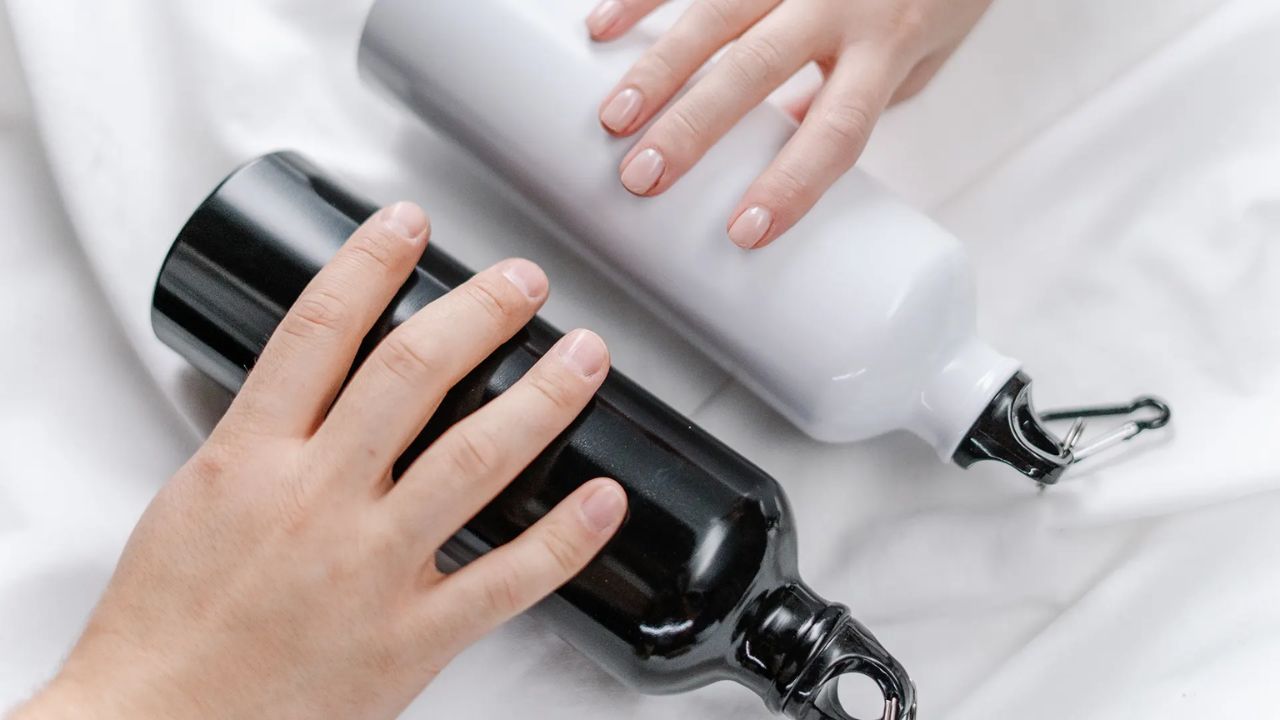
Aluminum is lighter than stainless and somewhat cheaper to produce, but it requires a protective inner coating for food-contact safety because bare aluminum reacts with acidic beverages. The inner coating is the weak point in aluminum bottle design — it can scratch, chip, and degrade over time, and once it’s compromised the bottle needs to be replaced. Aluminum makes sense for applications where weight is paramount (ultralight outdoor gear, cycling), less sense for everyday hydration products where longevity matters.
Knowing which material fits your use case and your customer’s expectations is the first decision, and it constrains most of what comes after it.
Insulation: What the Numbers Actually Mean
Vacuum insulation is the technology that separates a bottle that keeps beverages hot or cold for hours from one that doesn’t. The physics are well understood: two walls of stainless steel with a vacuum between them create a thermal barrier that dramatically slows heat transfer. What varies between manufacturers is the quality of the vacuum seal, which determines how well the insulation performs over the product’s life.
A new vacuum-insulated bottle from a quality manufacturer should keep water ice-cold for 24 hours and coffee hot for 12 hours. These numbers are achievable and aren’t marketing exaggeration for well-made products. What happens over time is the interesting part — a vacuum seal that degrades within a year means a bottle that progressively loses its insulation performance until it’s essentially a single-wall container. A seal that holds for five years means the bottle performs as advertised for its entire useful life.
The vacuum seal quality is determined by the manufacturing process used to achieve and maintain the vacuum, which isn’t visible in the finished product and doesn’t show up in basic quality inspection. It’s a process quality issue, not a product quality issue — which means you’re largely trusting the manufacturer’s production consistency rather than your own verification.
The test that reveals seal quality over time is simple but takes time: check a sample bottle’s temperature retention performance, then check another unit from the same batch six months later. A brand building a long-term product line benefits from establishing this kind of ongoing validation with their manufacturer rather than relying solely on initial sample testing.
Lid Engineering: The Most Variable Component
The lid is where the quality differentiation between drink bottles is most apparent in use, and it’s where manufacturers vary most significantly in their design and production standards.
A lid has to accomplish several things at once: create a reliable seal to prevent leakage, open easily with one or two hands, not accumulate bacteria in crevices, withstand repeated washing, and maintain its function over months or years of daily use. The number of moving parts in most lid designs means there are several independent failure modes, and the quality of each component determines which ones actually occur.
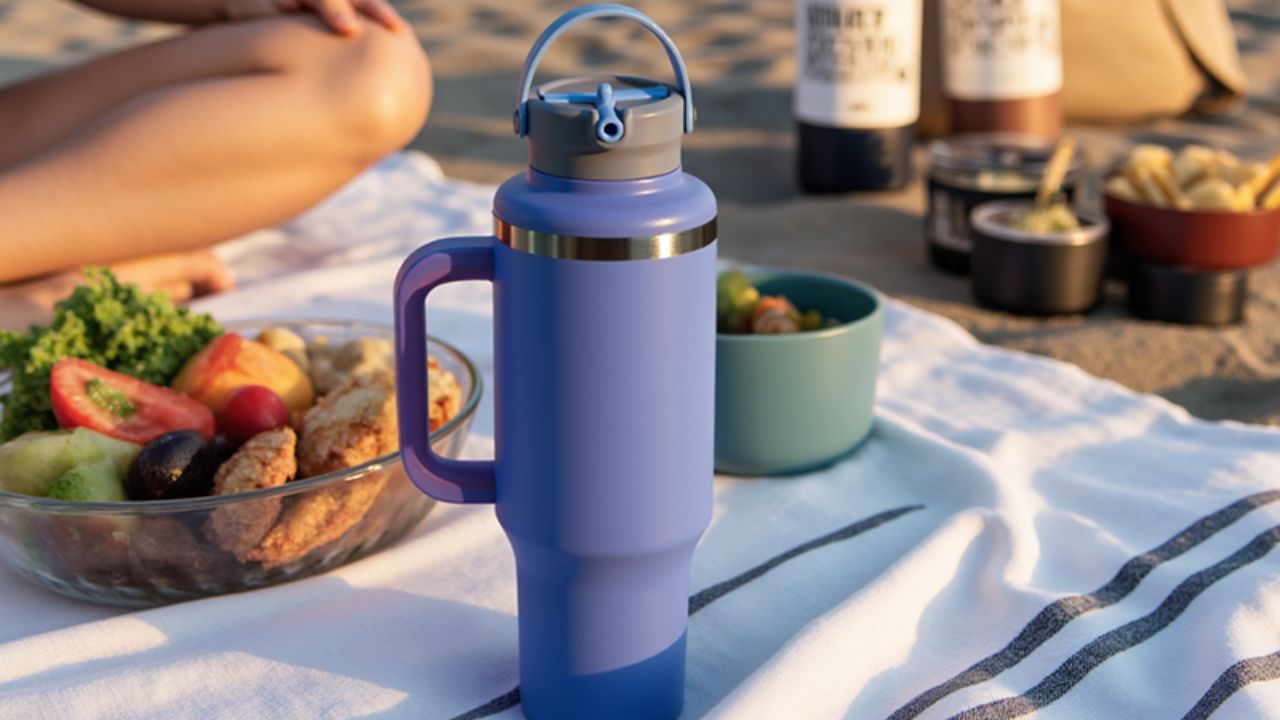
The flip-top lid with a single latch is the current standard for everyday hydration bottles. A well-engineered version stays sealed under vigorous shaking in any orientation, opens with a clear positive click, and maintains its feel over hundreds of cycles. A poorly engineered version develops play in the latch after a few months, which leads to unreliable sealing and eventually leakage.
Straw lids have become increasingly popular and have their own engineering considerations. The straw material (most commonly silicone or Tritan), the bite valve design, and the mechanism that allows the straw to fold down for transport without contaminating the drinking surface all need to work reliably. Straw lids are more complex to manufacture than flip-top lids and have more potential failure points — the tradeoff is ease of use without having to tip the bottle.
Wide-mouth lids are the simplest design and the most durable because there are fewer moving parts. They’re preferred for use cases where easy cleaning matters (smoothies, protein drinks with residue) or where ice needs to be added. The limitation is that you need to tip the bottle to drink from a wide-mouth opening, which isn’t ideal during activity.
The Certification Landscape
Selling drink bottles into different markets requires different certifications, and this is an area where brands frequently underestimate the complexity.
In the US, FDA 21 CFR compliance covers food-contact materials. For stainless steel bottles, the relevant standard covers the food-contact grade of the steel and any coatings applied to interior surfaces. For plastic components, BPA-free certification needs to be documented rather than just claimed. California Proposition 65 requires warning labels for products sold in California that contain listed chemicals above threshold levels — relevant for some printing and finishing chemicals used on exterior surfaces.
In the EU, food contact materials fall under EC Regulation 1935/2004, with specific regulations for different materials. LFGB certification (the German food and commodities act standard) is the most commonly cited quality benchmark and is broadly accepted as evidence of EU food safety compliance. CE marking may be relevant depending on product category and market channel.
The certification landscape changes, and specific requirements vary by channel — products sold through major retail chains often face retailer-specific certification requirements on top of the regulatory baseline. Understanding what certifications you need for your specific markets and channels before you lock in a manufacturer is considerably easier than retrofitting certification requirements after you’ve started production.
For a clearer picture of what’s available across material types, capacities, and certification levels, working directly with an established drink bottles manufacturer who can discuss certification documentation and compliance history for their product lines is a more efficient starting point than trying to navigate these requirements independently.
Finishing and Decoration: Where the Brand Lives
The exterior of the bottle is the primary brand touchpoint, and the finishing options have meaningfully different aesthetics, durability profiles, and price points.
Powder coat finishes are the current market standard for premium stainless bottles. They provide color uniformity, good scratch resistance, and a texture that improves grip. The quality variable in powder coat is adhesion — properly applied powder coat won’t chip or peel under normal use, but adhesion depends on surface preparation before coating. Requesting a cross-hatch adhesion test on samples is a simple way to verify coating quality before committing to a production run.
Electroplating provides metallic finishes (rose gold, chrome, and similar) and requires more careful evaluation because some plating processes use chemicals that may have regulatory implications. Understanding what’s in the plating process, and whether the finished product meets requirements for your target markets, matters more for plated finishes than for powder coat.
Laser engraving is the most durable decoration method because it removes rather than adds material — there’s nothing to chip, fade, or peel. It reads as premium and creates a distinctive tactile quality that other methods don’t match. The limitation is that it’s more expensive per unit and the available aesthetic is constrained to a single color (the base metal).
Screen printing and pad printing are lower-cost options with a wider color range. They work well for complex logos and multi-color designs but have a shorter expected lifespan than laser engraving under daily use conditions.
What This Means for Sourcing
The variables above interact in ways that make the drink bottle category more technically demanding than surface appearances suggest. A brand that understands these variables can have a productive conversation with a manufacturer about what they actually need. A brand that doesn’t tends to make sourcing decisions based primarily on price, and discovers the gaps when the product is already in customers’ hands.
The most efficient path through this complexity is direct engagement with manufacturers who have deep experience across all of these variables — material selection, insulation manufacturing, lid engineering, certification compliance, and finishing — rather than relying on general-purpose promotional product suppliers who carry a limited range and can’t advise on the technical tradeoffs. The category rewards buyers who do the learning upfront.